
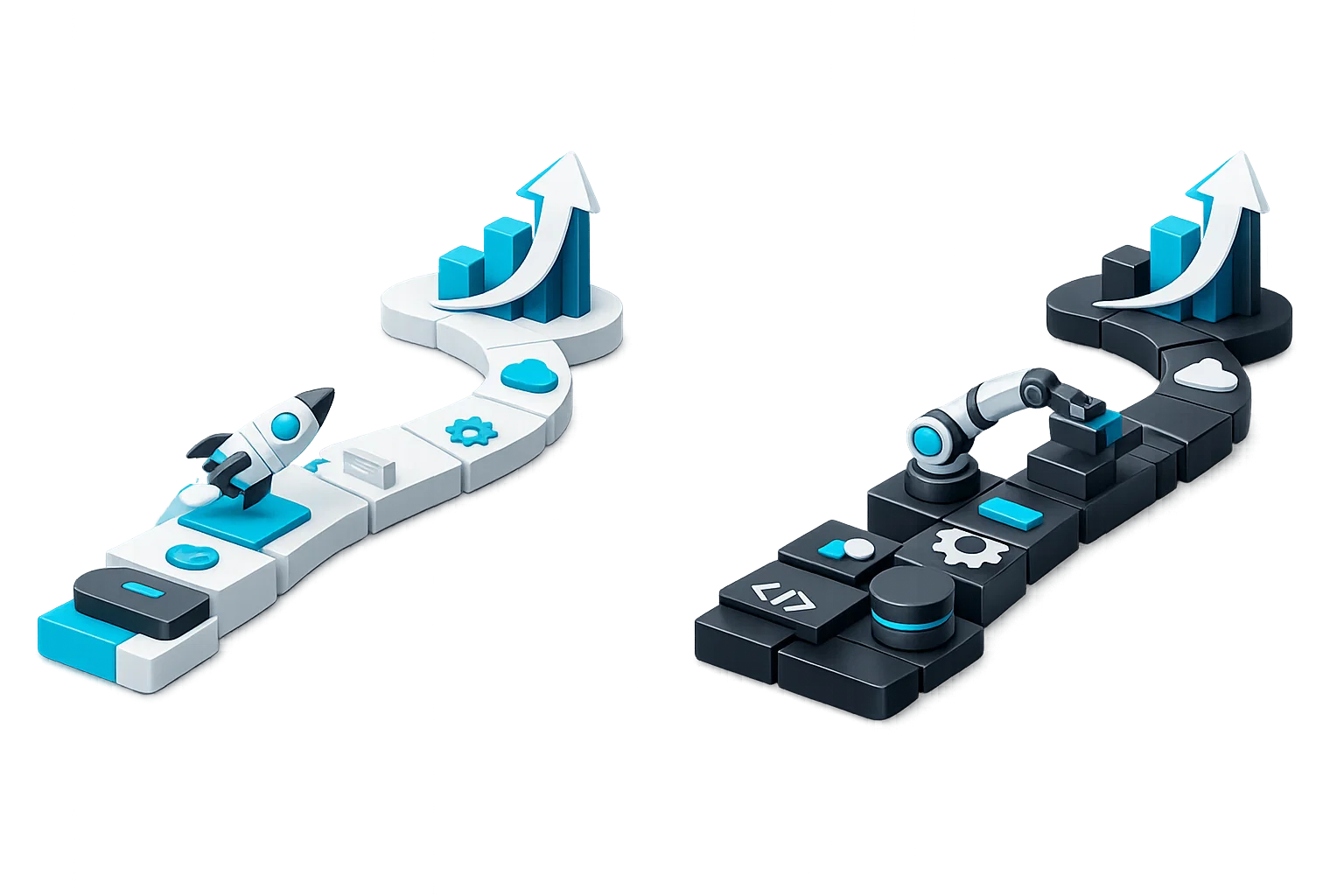

One of the most common questions founders ask before launching a SAAS product is simple—but critical:
Should I start with a premade SAAS solution or invest in a custom MVP?
Both options can work brilliantly. Both can also fail if chosen at the wrong time or for the wrong reasons. The key isn’t which option is “better,” but which option aligns with your current business stage, goals, and risk tolerance.
This guide breaks down premade SAAS and custom MVP development in a practical, no-fluff way, helping you make a confident decision for your business.
Understanding Premade SAAS Solutions
Premade SAAS solutions are ready-to-market platforms built around proven use cases. They come with core features already developed and tested, allowing founders to launch quickly.
Typical characteristics include:
- Prebuilt core functionality
- Faster setup and deployment
- Lower upfront development cost
- Customizable branding and workflows
- Shorter time to market
Premade solutions are especially popular among founders who want to validate ideas quickly or enter competitive markets without long development cycles.
Understanding Custom MVP Development
Custom MVP development involves building a SAAS product from the ground up, based entirely on your specific idea, workflows, and business logic.
Key characteristics include:
- Fully tailored feature set
- Greater flexibility in architecture
- Unique workflows and logic
- Higher development effort
- Longer initial timelines
Custom MVPs are ideal when your idea cannot be mapped cleanly onto existing systems or when differentiation depends heavily on unique functionality.
Speed to Market: The Biggest Differentiator
If speed is your top priority, premade SAAS solutions usually win.
Launching faster allows you to:
- Test real market demand
- Start user acquisition earlier
- Reduce time spent in planning mode
- Learn from real usage instead of assumptions
Custom MVPs, while powerful, take more time due to planning, architecture decisions, and feature-by-feature development.
If timing matters, speed becomes a competitive advantage.
Cost Considerations: Short-Term vs Long-Term
Premade SAAS solutions typically:
- Cost less upfront
- Reduce early development expenses
- Minimize trial-and-error costs
Custom MVPs:
- Require higher initial investment
- Offer long-term architectural freedom
- Can reduce future refactoring costs
For early-stage startups, lower upfront risk often matters more than long-term optimization. Many founders choose to start lean and invest more only after validation.
Flexibility and Control
Custom MVPs clearly offer more flexibility. You can:
- Design unique workflows
- Build specialized logic
- Control every architectural decision
However, this flexibility comes at the cost of speed and complexity.
Premade SAAS platforms are flexible within defined boundaries. Most allow:
- Feature adjustments
- Workflow configuration
- Branding and UI customization
- Integration additions
For many businesses, this level of flexibility is more than enough—especially at the MVP stage.
Risk Management and Validation
Launching a SAAS product is risky. The biggest risk is building something nobody wants.
Premade SAAS solutions reduce this risk by:
- Allowing faster validation
- Minimizing sunk development costs
- Enabling quicker pivots
Custom MVPs increase commitment early. If the idea fails validation, more time and money may be lost.
This is why many experienced founders prefer to validate first, customize deeper later.
Scalability: A Common Misconception
A common myth is that premade SAAS solutions don’t scale. In reality, scalability depends on architecture quality, not whether something was built from scratch.
Well-structured premade platforms are:
- Modular
- Cloud-friendly
- Extendable over time
Custom MVPs also scale well—but only if designed properly. Poor early decisions can hurt scalability regardless of approach.
The smarter question isn’t can it scale, but is it built with scalability in mind.
When Premade SAAS Is the Right Choice
Premade SAAS solutions are ideal if:
- You want to launch fast
- You’re validating a new idea
- You’re entering a competitive niche
- You have limited technical resources
- Your idea fits a proven use case
They allow you to focus on marketing, users, and growth instead of infrastructure.
When Custom MVP Makes More Sense
Custom MVP development is a better fit when:
- Your business logic is highly unique
- Existing solutions can’t support your workflow
- You have strong technical direction
- Differentiation depends on deep customization
- You’re building for regulated or complex environments
In these cases, custom development provides control that premade platforms may not offer.
A Hybrid Approach Many Startups Choose
In practice, many successful startups don’t treat this as an either-or decision.
A common strategy is:
- Launch using a premade SAAS foundation
- Validate demand and user behavior
- Customize and extend features
- Gradually evolve toward a more tailored system
This approach balances speed, learning, and long-term flexibility.
Final Thoughts: Choose Based on Stage, Not Ego
The biggest mistake founders make is choosing based on perception instead of practicality.
Premade SAAS solutions are not shortcuts.
Custom MVPs are not overkill.
They are tools—each useful at different stages.
If your goal is to launch faster, reduce risk, and learn early, starting with a premade foundation often makes sense. If your product demands deep customization from day one, custom MVP development may be the right path.
The smartest choice is the one that gets you real users, real feedback, and real momentum sooner.