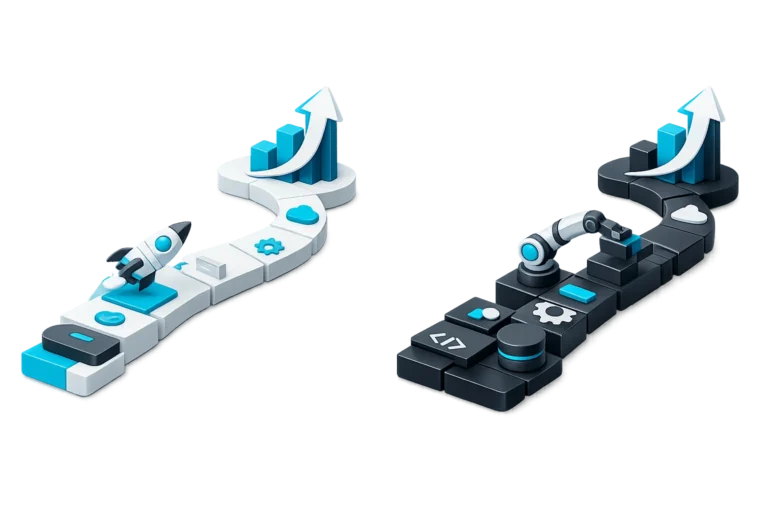


Launching a SAAS startup is exciting—but it’s also full of hidden traps. Many promising products fail not because the idea was weak, but because early decisions quietly set the business on the wrong path. The good news? Most SAAS startup mistakes are predictable and preventable.
In this guide, we’ll break down the most common SAAS startup mistakes founders make and show you how to avoid them early, before they become expensive problems.
Mistake 1: Building Too Much, Too Soon
One of the most frequent mistakes is overbuilding. Founders often try to impress users with dozens of features in the first release.
Why this hurts:
- Longer development timelines
- Higher costs before validation
- Confusing user experience
- Harder maintenance
How to avoid it:
Start with a focused MVP. Identify one core problem and build only the features required to solve it. Launch early, learn fast, and expand based on real usage—not assumptions.
Mistake 2: Skipping Market Validation
Many SAAS founders fall in love with their idea and assume others will too. Unfortunately, assumptions don’t pay bills.
Why this hurts:
- You may solve a problem nobody prioritizes
- Pricing expectations remain unclear
- Messaging doesn’t resonate
How to avoid it:
Validate before scaling. Talk to potential users, test landing pages, run small campaigns, or release a limited version to measure real interest. Early feedback is more valuable than polished features.
Mistake 3: Choosing the Wrong Development Approach
Starting from scratch isn’t always the smartest move. Many startups burn months rebuilding functionality that already exists elsewhere.
Why this hurts:
- Slower time to market
- Higher technical risk
- Delayed feedback
How to avoid it:
Use proven foundations where possible. Focus development effort on differentiation, not basic infrastructure. Speed and learning matter more than perfection in early stages.
Mistake 4: Ignoring UX and Product Clarity
A SAAS product can be technically solid and still fail if users don’t understand how to use it.
Why this hurts:
- Low activation rates
- High churn
- Increased support requests
How to avoid it:
Prioritize clarity. Simple onboarding, intuitive flows, and clean design matter more than advanced features. If users can’t see value quickly, they won’t stay.
Mistake 5: Poor Pricing Strategy
Pricing is often treated as an afterthought, leading to confusion or missed revenue.
Common pricing mistakes include:
- Underpricing out of fear
- Overcomplicated plans
- No clear value alignment
How to avoid it:
Start simple. Align pricing with the value delivered and adjust as you learn. Early pricing should support validation, not maximize profit.
Mistake 6: Ignoring Scalability Early On
While MVPs should be simple, ignoring scalability completely can create major problems later.
Why this hurts:
- Performance issues during growth
- Costly rewrites
- Technical debt
How to avoid it:
Build with scalability in mind, even if you don’t implement everything upfront. Clean architecture and modular design help future-proof your product without slowing launch.
Mistake 7: No Clear Go-To-Market Plan
Many startups build a product first and worry about users later. This often leads to disappointing launches.
Why this hurts:
- Low initial traction
- Wasted marketing spend
- Poor positioning
How to avoid it:
Define your go-to-market plan early. Know who your users are, where they spend time, and what message resonates. Even a simple strategy is better than none.
Mistake 8: Not Tracking the Right Metrics
Some founders focus on vanity metrics like sign-ups instead of meaningful indicators.
Why this hurts:
- False sense of progress
- Poor decision-making
- Missed retention issues
How to avoid it:
Track metrics that matter:
- Activation rate
- Retention
- Feature usage
- Conversion points
Data should guide your roadmap, not gut feelings.
Mistake 9: Trying to Do Everything Alone
SAAS startups often fail because founders try to handle development, marketing, support, and strategy all at once.
Why this hurts:
- Burnout
- Slower progress
- Lower quality decisions
How to avoid it:
Use systems, tools, and support where needed. Delegating or outsourcing specific tasks can dramatically improve focus and execution speed.
Mistake 10: Delaying Launch for Perfection
Perfection is the enemy of progress. Many SAAS products never launch because founders keep “polishing.”
Why this hurts:
- Lost momentum
- Missed market opportunities
- No real feedback
How to avoid it:
Launch when the product delivers value—even if it’s not perfect. Real users will tell you what actually needs improvement.
Why Avoiding These Mistakes Matters
Early-stage decisions have a compounding effect. Small missteps can turn into expensive problems later, while smart early choices create momentum.
Founders who succeed typically:
- Launch faster
- Validate earlier
- Iterate based on data
- Stay flexible
- Focus on users, not ego
Avoiding common mistakes doesn’t guarantee success—but it dramatically improves your odds.
Final Thoughts
Every SAAS startup makes mistakes. The difference between failure and growth is how early those mistakes are identified and corrected.
If you focus on validation, clarity, speed, and learning, you’ll avoid the most dangerous traps that slow down or kill promising products.
Start lean. Stay curious. Improve continuously.
That’s how strong SAAS businesses are built.